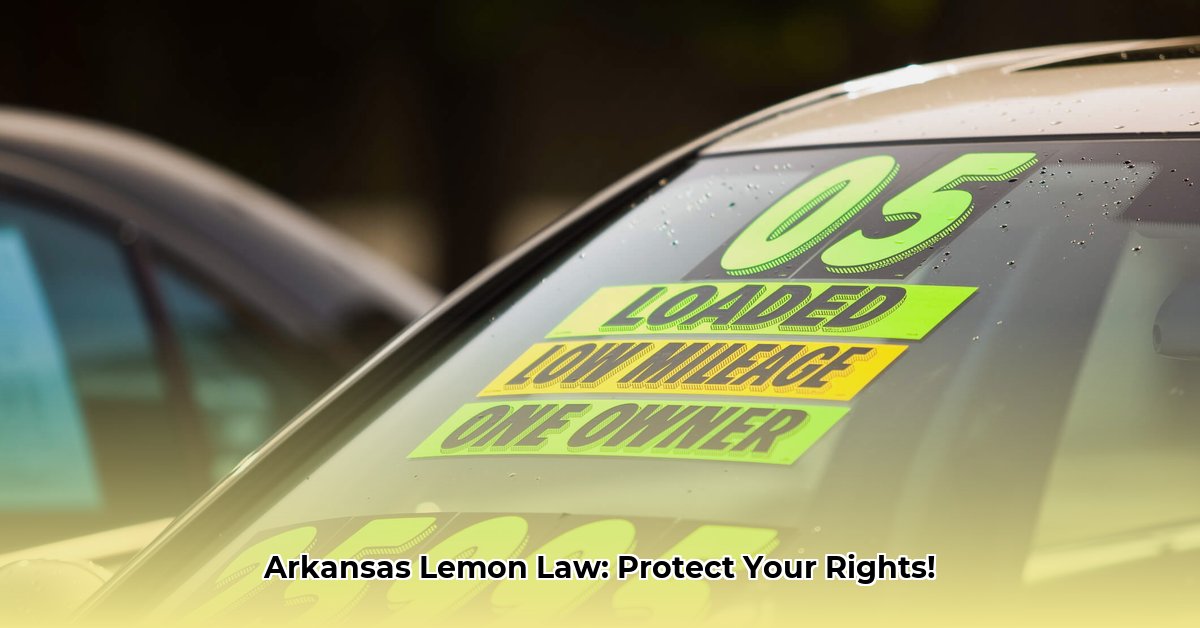
Understanding Arkansas Lemon Laws and Used Cars
Buying a used car in Arkansas is exciting, but it's crucial to understand your rights if problems arise. While Arkansas doesn't have a specific lemon law for used vehicles, the New Motor Vehicle Quality Assurance Act might offer some protection if your used car is still under the manufacturer's warranty. This guide clarifies your rights and the steps you can take.
The Arkansas New Motor Vehicle Quality Assurance Act
Arkansas's Lemon Law primarily covers new cars. However, if your used car is still under its original manufacturer's warranty (often the first 24 months or 24,000 miles, whichever comes first – check your warranty details!), the Act might provide some recourse for substantial defects. It's important to understand that this isn't a guarantee; the law's application to used cars is limited. A single repair visit generally won’t suffice; multiple unsuccessful attempts to fix a significant issue are necessary.
Defining "Substantial Defects"
What constitutes a "substantial defect"? It's not a minor inconvenience. Think of problems that significantly affect the car's safety, use, or value. A persistent engine problem or a recurring safety issue that the dealer can't fix? Likely a substantial defect. A slightly squeaky door? Probably not. The determination often depends on the specific circumstances and expert interpretation.
Documentation: Your Most Powerful Tool
Meticulous documentation is paramount. Keep records of everything:
- Purchase Agreement: Proof of purchase.
- Repair Orders: Every repair attempt, detailing the date, problem, repairs made, and cost.
- Communication Logs: Emails, letters, texts – keep copies of all communication with the seller or manufacturer.
- Photos & Videos: Visual evidence of the defects.
This documentation will be crucial in proving your case if a dispute arises. Isn’t it reassuring to know that having detailed records can significantly improve your chance of a successful outcome?
Dealers vs. Private Sellers: A Crucial Distinction
Your recourse differs depending on whether you bought from a dealership or a private seller. Dealerships have a higher level of legal responsibility due to warranties and consumer protection laws. Private sellers have fewer legal obligations, though other consumer protection laws may still apply. Regardless, thorough documentation remains essential in both scenarios. Do you know how these legal differences could impact your ability to attain a resolution?
Steps to Take if You Suspect a Lemon
Contact the Seller: Clearly explain the problem and request repair. Document this communication.
Track Repair Attempts: Meticulously document each repair attempt, including dates, costs, and descriptions of the issue and repairs attempted.
Gather Evidence: Compile all documentation: purchase agreement, repair orders, photos, communication logs, and any expert opinions.
Seek Legal Counsel: If the problem persists, consult a lawyer specializing in consumer protection or lemon law. They can advise you on your options and help you navigate the legal process. Early legal advice significantly enhances your odds of resolution.
Alternative Dispute Resolution
Before pursuing a lawsuit, consider alternative dispute resolution methods like mediation or arbitration. These methods can be faster, less expensive, and less stressful than litigation. The Arkansas Attorney General's office might offer resources for these options. Have you considered the benefits of early-stage dispute resolution?
Preventing Lemon Purchases: Proactive Measures
Prevention is better than cure. Take proactive steps like:
- Pre-purchase Inspection: Have a trusted mechanic inspect the car before buying.
- Warranty Review: Thoroughly understand the manufacturer's warranty terms and limits.
- Vehicle History Report: Obtain a vehicle history report to identify potential problems.
These precautions can significantly reduce your risk of buying a lemon. What would constitute a reasonable amount to invest in preventative measures to avoid potential repair costs down the line?
Helpful Resources
The Arkansas Attorney General's Office website (https://arkansasag.gov/divisions/public-protection/arkansas-lemon-laws/) is a valuable resource for information on consumer protection and Lemon Laws. Local legal aid organizations can also provide assistance.
Conclusion: Be Proactive and Informed
Buying a used car requires careful consideration. Understanding your rights, documenting everything, and knowing your options empowers you to pursue recourse if you encounter problems. While this guide provides valuable information, consult legal counsel for personalized advice in your specific situation. Remember, proactive steps and thorough documentation are your best defense.